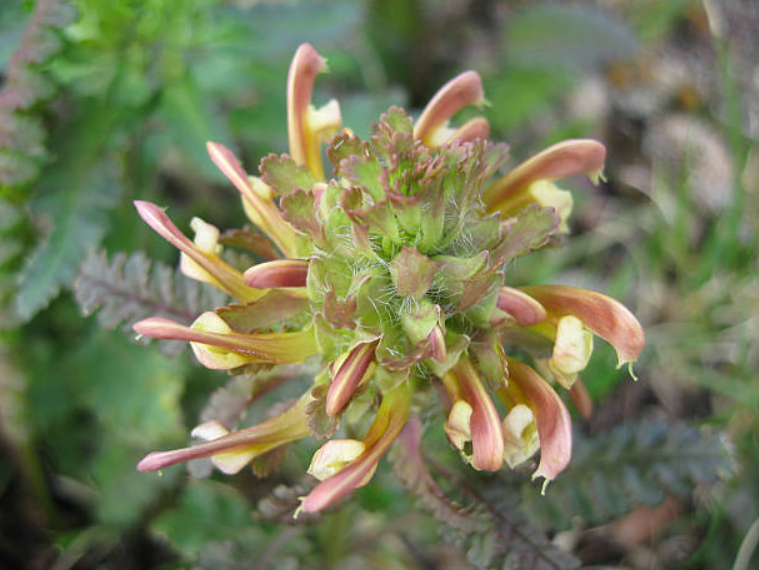
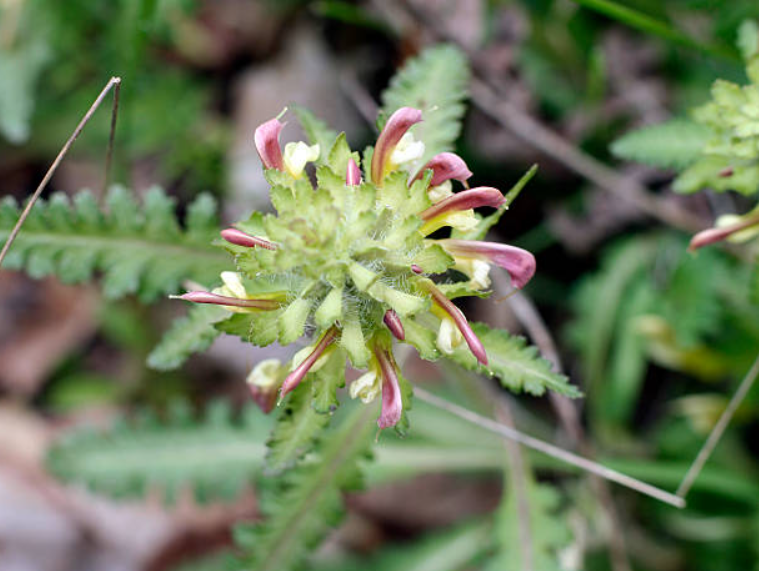
Pedicularis canadensis
Lousewort
Hemiparasitic P. canadensis follows in the true footsteps of the Orobanchaceae family, resisting being easily defined, evading a singular role, and blurring any line that dares to form a clear boundary around it.
In doing so, it invites those who observe it to confront the limits of language used to describe the living world, subtly altering how we think of plants themselves.
A Muscle Relaxant Herb
In herbal practice, Pedicularis spp. is most often used as a musculoskeletal relaxant, particularly for tension held within skeletal muscle – the most common voluntary muscle type. Michael Moore claimed that it is among the most safe and effective of all muscle relaxant herbs. Its reputation for safety makes pedicularis suitable for both children and adults as well as extends into more specific applications, including its use during childbirth. Christa Sinadinos describes its role in supporting muscular relaxation during labor without negative impacts or disrupting the natural rhythm of uterine contractions. She also suggests Pedicularis spp. for both internal and external use postpartum to help ease residual muscle tension and pain; refer to the Safety section of this monograph for further information on pedicularis use during pregnancy and postpartum.
In broader use, P. canadensis is indicated for individuals who have tense muscles from adrenaline, cortisol, and overstress or overuse. This makes it useful for addressing muscle spasms, tension, and pain associated with both acute injury as well as chronic pain–particularly in the neck and back – and shoulder tension. P. canadensis is also indicated for sprains, strains, and tears of tendons or ligaments.
The Plant Kingdom’s Anti-Hero
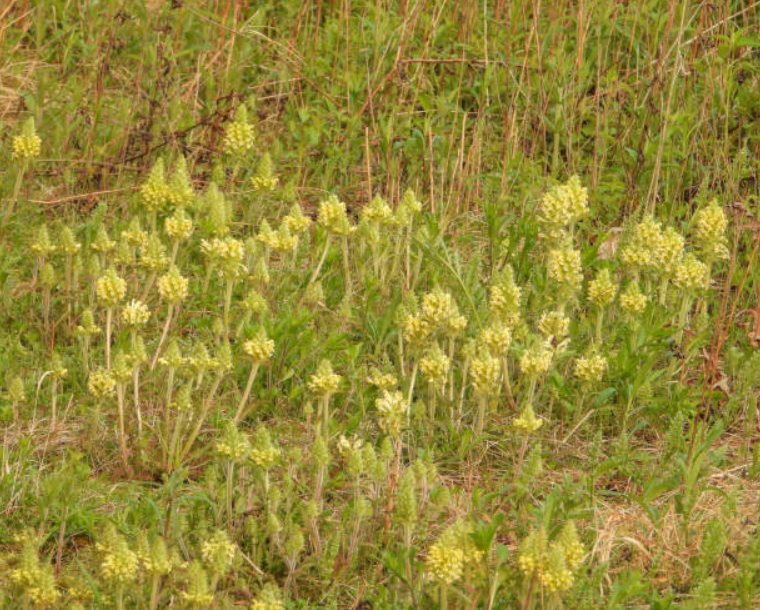
In grassland systems, pedicularis establishes relationships with tall, dominant prairie grasses, with its parasitic influence hindering their growth and reducing their competitive dominance. This allows less aggressive forbs and smaller bunch grasses to reclaim patches of ground. Pedicularis contributes to increased plant diversity across the habitats it occupies, playing an unexpected role in maintaining ecological balance, while also relying on these biodiverse systems for its own survival, as it tends to diminish when species diversity declines.
With its intricate web of ecological interactions–from promoting diverse plant species which in turn supports a wide variety of insects, pollinators, and other invertebrates that then serve as food sources for birds–P. canadensis plays a pivotal role in overall ecological balance, albeit in an anti-hero fashion.